

Step 1
Define the split
We agree in writing on which systems and responsibilities belong to each team.
Managed IT Support
Co-managed IT support places Mayer Networks alongside your internal IT staff rather than replacing them. Your team keeps ownership of the systems, users, applications and priorities it knows best, and we add engineers, deeper specialization, cybersecurity capability, infrastructure expertise, our ticketing and remote monitoring platforms, escalation support, project capacity and 24/7/365 coverage behind them.
What the agreement covers
Co-managed IT support sits under the same Mayer Networks managed-service model: monitoring, cybersecurity, infrastructure and Microsoft 365 expertise, backup and recovery, vendor coordination, documentation, lifecycle planning and a predictable monthly agreement. The difference is that we are not taking over every day-to-day responsibility. The agreement builds the platform and engineering bench behind the team you already employ.
When technology stops an employee from working, they have somewhere to go that is not a coworker who is good with computers.
Your employees spend their time doing their jobs instead of becoming their own IT department.
We do not depend entirely on a user noticing something first.
Actionable problems are found earlier, often before they turn into a disruption anyone feels.
Workstations and laptops are the tools your staff touch every hour of the day.
Machines behave the same way across the organization, so support is faster and surprises are rarer.
The systems everything else depends on need maintenance whether anyone is watching or not.
Core systems are maintained on a schedule rather than repaired on a deadline.
Cloud & InfrastructureIf employees depend on it to connect, it is part of the IT environment.
Connectivity problems get diagnosed by engineers instead of debated between vendors.
Network InfrastructureMost organizations now run their email, files and collaboration inside one Microsoft tenant.
The tenant is administered deliberately rather than accumulating settings nobody remembers choosing.
Microsoft 365Managed IT Support and cybersecurity are no longer separate conversations.
Security layers are designed for your environment and risk, then actively managed. Which layers apply depends on the security design and agreement.
CybersecurityBackup is not software somebody installed once. It is a responsibility somebody has to hold.
The question stops being whether backups exist and becomes whether you can recover. That is the one that matters.
Backup & Data ProtectionStop being the middleman between your IT vendors.
When vendors point at each other, we take the call so nobody at your organization has to diagnose the problem before they are allowed to ask for help.
A technology environment should not exist only in one person's memory.
The organization is less dependent on any single employee or technician remaining available.
Know what needs replaced before it becomes an emergency.
Hardware becomes a planned line item instead of an unbudgeted purchase made under pressure.
IT Procurement & Hardware LifecycleA managed relationship should help leadership see what is coming.
Especially valuable where spending follows an annual budget cycle: the need is known before the project becomes urgent.
IT Consulting & StrategyCoverage
Co-managed clients have access to Mayer Networks support 24 hours a day, 7 days a week, 365 days a year, behind internal IT rather than instead of it, so internal staff are not the only phone number that matters at 2:00 AM.
Coverage and how after-hours requests are handled are defined in the agreement.
What this actually is
Your internal IT team stays in place and keeps ownership of the environment. Mayer Networks works behind them with more engineers, more coverage and more specialization in the moments where one team cannot reasonably do everything.
Internal IT handles everyday issues
Mayer Networks provides escalation when an issue becomes more complex than the day should allow.
Internal IT needs better tooling
Your team can work inside Mayer Networks ticketing and RMM capabilities where the agreement includes them.
Internal IT needs cybersecurity depth
We add security layers and monitoring around the team you already have, based on the agreement.
Internal IT needs after-hours coverage
Managed clients have access to 24/7/365 support and escalation so your staff are not the only phone number.
Internal IT has a major project
We add engineering capacity for the project so daily support does not stall.
Internal IT has a vacation, illness or staffing gap
We provide continuity and coverage while your team is short-handed.
Internal IT needs infrastructure expertise
We add server, networking, Microsoft 365, cloud, backup and cybersecurity specialization.
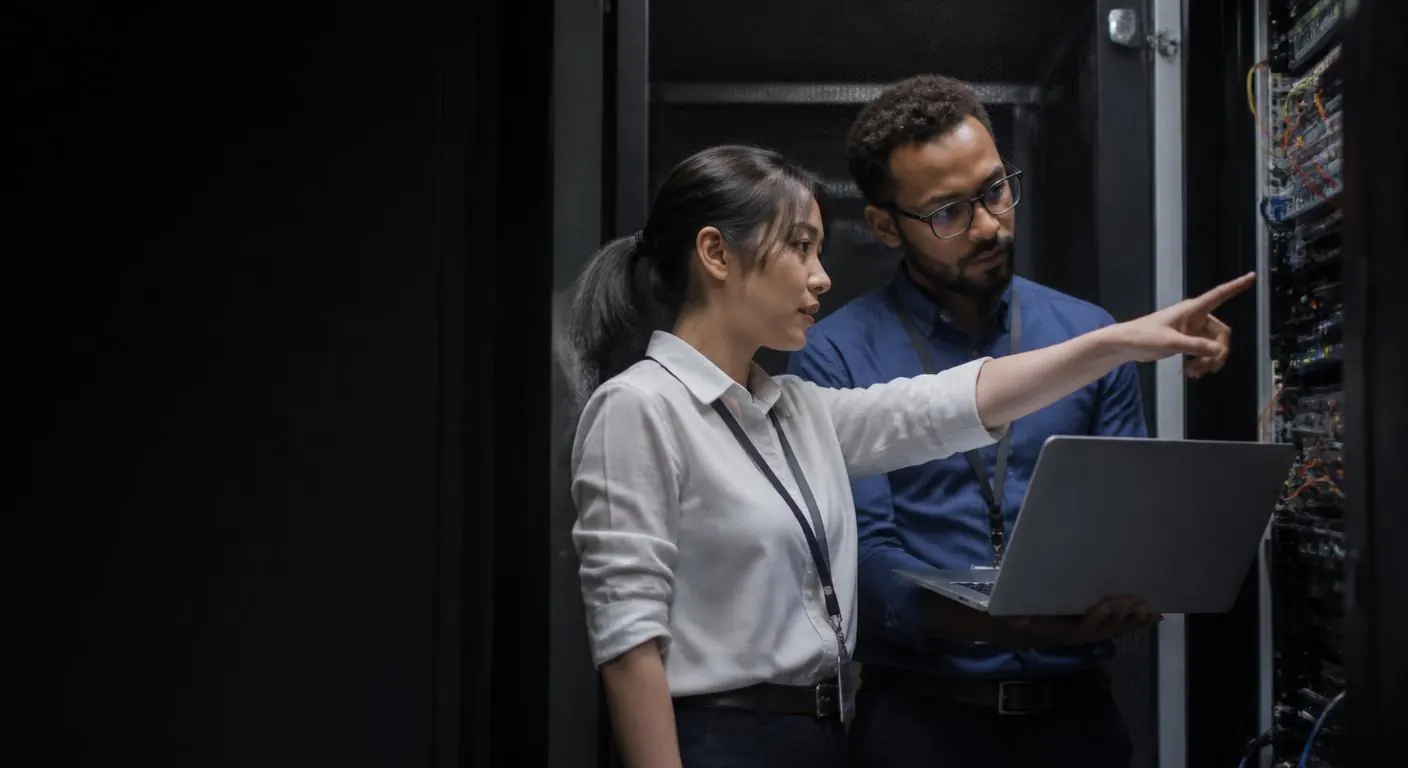
We extend your IT department. We do not replace it.
Differentiator
We are not trying to take control away from internal IT. Depending on the agreement and the permissions you set, we can give your team more control and better visibility by putting them inside the same operational platforms our engineers work in.
Internal IT gains a real service-desk platform instead of a shared mailbox and hallway requests.
The same RMM platform we use to manage endpoints can be made available to your team.
Exact permissions and capabilities are defined in the agreement so both teams know who can do what.
Escalation
Internal staff handle everyday issues. When something becomes larger than a normal day, our engineers become the escalation point.
Hardware, operating system and hypervisor problems handled with people who rebuild these regularly.
Host, cluster and storage issues that appear a few times a year and never at a convenient hour.
Routing, firewall, VLAN and circuit problems across buildings and carriers.
Identity, mail flow, licensing and tenant issues escalated beyond a support portal ticket.
Suspected compromise, alerts that need interpretation, and containment decisions.
Restores that must work the first time, and recovery decisions made under pressure.
This keeps your internal staff from being the single point of failure for every technical discipline in the organization.
Cybersecurity
An internal IT department should not have to independently build and operate every security discipline. Depending on the agreement, we provide these layers around the team you already have.
The security stack is designed around what your organization needs and what the agreement covers. Not every service is included automatically, and we will tell you plainly which layers we think matter most for your environment.
Review the Security Gaps Around Your IT TeamStep 1
We agree in writing on which systems and responsibilities belong to each team.
Step 2
Monitoring, patching, documentation and security tools are shared so both teams see the same environment.
Step 3
Your team stays in control; we take escalations, projects and specialized work.
Step 4
Regular reviews confirm the split still fits and identify what should change.
Continuity
A one- or two-person IT department can be excellent and still be exposed. The risk is concentration of knowledge, not the quality of the people carrying it.
Vacation weeks where nobody else knows how the environment is built.
Illness or emergency, usually the same week something else goes wrong.
A resignation that takes undocumented knowledge with it.
Evenings, weekends and holidays when the organization still needs to operate.
Projects that stall because day-to-day support consumes every hour.
Work that requires more hands than the organization employs.
Co-managed IT support puts a bench behind your internal team, along with documentation that survives a staffing change.
Capacity
Internal IT often has enough capacity for daily operations and none left over when a major project arrives. We add engineers for the project so your staff can keep supporting users.
File, server and mailbox migrations planned and executed alongside your team rather than squeezed between support calls.
New hosts, virtualization work, storage and operating-system upgrades handled by engineers who do them continuously.
Tenant moves, identity work, SharePoint and Teams rollouts and licensing restructures.
Firewall replacements, switching, Wi-Fi and multi-building connectivity work.
Deploying MFA, endpoint protection, email security or monitoring across the organization on a schedule.
Moving workloads to private cloud or hosted infrastructure without pausing everyday support.
How project work is scoped and whether it is included depends on the co-managed package agreed with your organization.
Specialization
These arrive rarely and require depth. Mayer Networks engineers do this work continuously across many environments, so your team does not have to relearn it each time.
Capability
An organization may need expertise across servers, networking, cybersecurity, cloud, Microsoft 365, backup and projects without needing a dedicated full-time specialist in each area.
Access to a broader pool of expertise through one monthly agreement. Co-managed packages can be structured to include escalation support, tools, monitoring, cybersecurity, infrastructure management, projects and 24/7/365 coverage, so an organization can increase capability without hiring several specialists at once.
The point is not that it is cheaper than employees. The point is that no small team can cover all of it alone.
Which model fits
Both sit under the same Mayer Networks Managed IT model. The difference is who carries primary responsibility for the environment.
No internal IT required. Mayer Networks becomes your complete IT department.
Your internal IT team stays in place, with shared responsibilities and additional support from Mayer Networks.
No internal IT team?
If your organization does not maintain internal IT staff, or wants Mayer Networks to take primary responsibility for the technology environment, the fully managed model is built for that.
Mayer Networks can become the organization's complete IT department, providing user support, infrastructure management, Microsoft 365, cybersecurity, vendor coordination, planning and 24/7/365 coverage.
Explore Fully Managed IT SupportService scope, coverage and response arrangements are defined in the agreement.
Co-managed arrangements fail in one predictable way: both sides assume the other is watching something. So the division is written down before work starts, system by system rather than in general terms, including who patches servers, who owns identity and conditional access, who verifies restores, who holds vendor relationships and who is called at 2am.
In practice internal staff usually keep the work that depends on knowing the organization, application support, users and departmental process, while we take the parts that need specialist depth or after-hours coverage: firewalls, virtualization, backup engineering, identity, and escalations that would otherwise consume a day of somebody's week.
No. Co-managed engagements exist to make internal teams more effective, and the division of responsibility is documented.
Yes. Co-managed agreements can be structured so internal IT works inside our ticketing system and remote monitoring and management platform, with permissions defined in the agreement.
Whatever fits the organization. Users often continue contacting internal staff, with our team handling escalations.
Yes. Many co-managed relationships start with security monitoring or backup and expand from there.
Yes. Managed clients have access to support 24 hours a day, 7 days a week, 365 days a year, with monitoring and response arrangements defined in the agreement.
Co-managed agreements are normally structured around a predictable monthly cost covering the scope selected, which can include escalation, tools, monitoring, cybersecurity, infrastructure management and, depending on the package, project work.
Tell us what you are running and what is not working. We will tell you plainly what we would do about it.